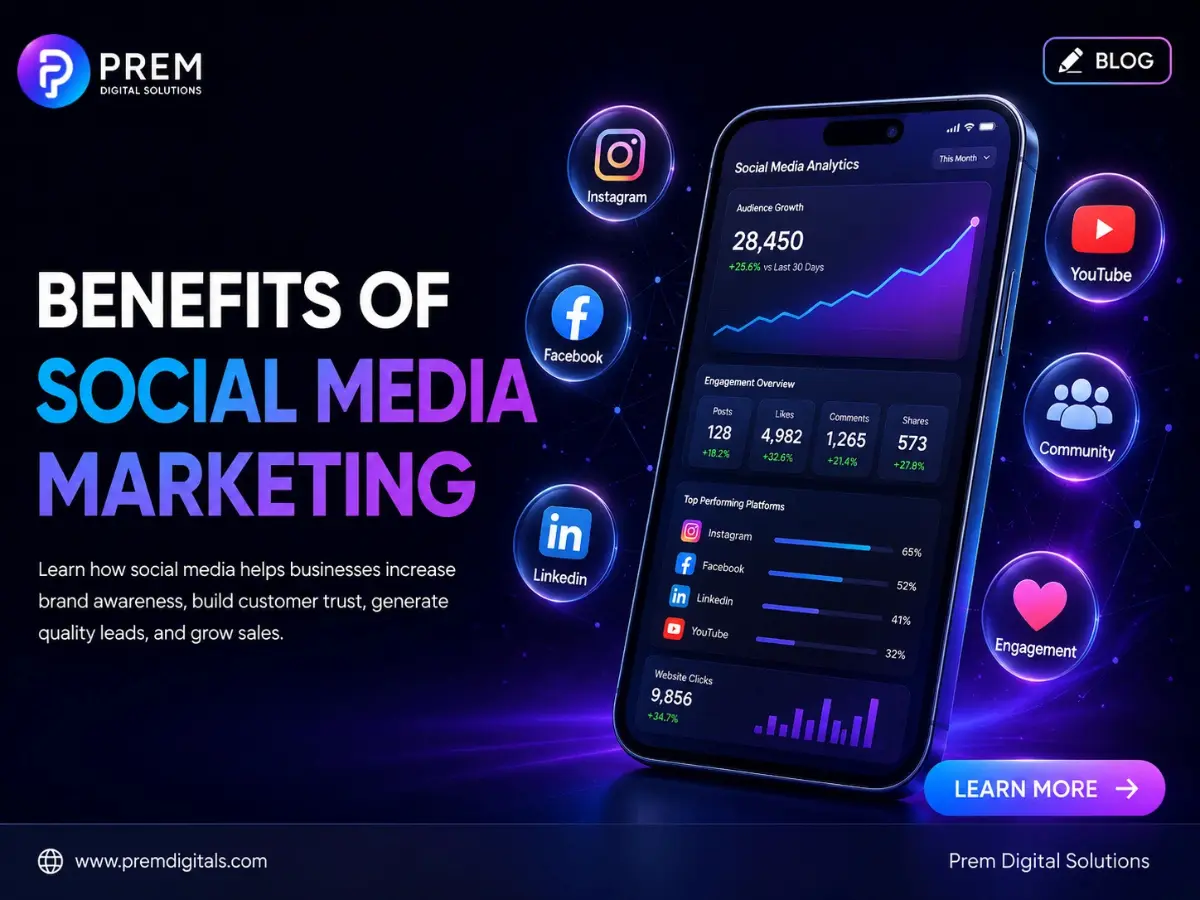
Social media has become one of the most powerful marketing channels for businesses of every size. Millions of people spend hours every day on platforms like Instagram, Facebook, LinkedIn, YouTube, and X (formerly Twitter), making these platforms ideal places to reach potential customers. In 2026, social media marketing is no longer just about posting photos—it is about building relationships, increasing brand visibility, generating leads, and driving measurable business growth. This guide explains why social media marketing is essential and how businesses can use it effectively.
Why Social Media Marketing Matters
Consumers now discover brands through social media before visiting websites or making purchases. Whether someone is searching for product reviews, checking customer testimonials, or watching short videos, social platforms influence buying decisions every day.
Businesses that consistently publish valuable content remain visible to their audience, while businesses without an active presence often lose attention to competitors.
Social media allows companies to communicate directly with customers while building long-term relationships instead of relying solely on traditional advertising.
1. Increase Brand Awareness
One of the biggest advantages of social media marketing is increased brand awareness. Every post, story, reel, or video creates another opportunity for potential customers to discover your business.
High-quality content can reach thousands—or even millions—of users through shares, recommendations, and platform algorithms without requiring massive advertising budgets.
Consistent branding across all platforms helps customers recognize and remember your business.
2. Build Trust and Credibility
People buy from businesses they trust. Regularly sharing educational content, customer success stories, behind-the-scenes updates, and testimonials demonstrates expertise while making your brand feel authentic.
Responding to comments and messages also shows customers that real people stand behind your business.
Trust built through social media often becomes the deciding factor when customers compare multiple companies.
3. Engage Directly with Customers
Unlike traditional marketing channels, social media creates two-way communication. Customers can ask questions, provide feedback, and interact directly with your brand.
Quick responses improve customer satisfaction while strengthening relationships with your audience.
Engagement also signals platform algorithms that your content is valuable, increasing organic reach.
4. Drive Website Traffic
Every social media profile becomes another gateway to your website. Sharing blog posts, portfolio projects, landing pages, and service information encourages users to visit your site for more details.
More website visitors create more opportunities for lead generation, sales, and SEO improvements.
5. Generate Qualified Leads
Social media platforms provide numerous ways to generate business enquiries, including direct messages, lead forms, click-to-call buttons, appointment bookings, and website visits.
Businesses that consistently publish educational and problem-solving content naturally attract customers who are already interested in their services.
6. Increase Sales and Revenue
Modern social media platforms support the entire customer journey—from awareness to purchase. Reels introduce your business, educational posts build trust, testimonials reduce hesitation, and strong calls-to-action encourage customers to buy.
Paid advertising combined with organic content creates an effective system for generating consistent sales.
7. Affordable Marketing for Small Businesses
Compared to television, newspapers, or outdoor advertising, social media marketing is significantly more affordable.
Even businesses with limited budgets can reach thousands of potential customers through consistent content creation and highly targeted advertising campaigns.
This makes social media especially valuable for startups and local businesses.
8. Build a Loyal Community
Successful businesses don't simply sell products—they build communities. Social media encourages conversations, user-generated content, and long-term customer relationships.
Loyal followers often become repeat customers and recommend your business to friends and family, creating valuable word-of-mouth marketing.
9. Measure Everything
Unlike traditional marketing, social media provides detailed performance metrics including reach, impressions, engagement, website clicks, conversions, and audience demographics.
These insights allow businesses to understand exactly what content performs best and continuously improve future campaigns.
Which Social Media Platform Should You Use?
Different platforms serve different audiences. Rather than trying to be everywhere, businesses should focus on platforms where their ideal customers spend the most time.
- Instagram – Reels, stories, product showcases, local businesses.
- Facebook – Community building, local marketing, paid advertising.
- LinkedIn – B2B marketing, professionals, corporate branding.
- YouTube – Educational videos, tutorials, long-term visibility.
- Pinterest – Fashion, lifestyle, home décor, creative businesses.
- X (Twitter) – Industry news, updates, conversations.
Common Social Media Marketing Mistakes
Many businesses fail because they focus only on selling instead of providing value.
- Posting inconsistently
- Ignoring customer comments
- Using poor-quality images
- No clear branding
- Posting without strategy
- Buying fake followers
- Not tracking analytics
- Publishing only promotional content
The Future of Social Media Marketing
Artificial Intelligence is transforming social media marketing. AI now assists with content creation, audience targeting, analytics, video editing, and advertising optimization.
Short-form videos, personalized recommendations, and AI-powered advertising will continue driving the future of digital marketing.
Businesses that consistently create valuable content while embracing new technology will maintain a competitive advantage.
Final Thoughts
Social media marketing is one of the most effective ways to build brand awareness, connect with customers, generate leads, and increase revenue. Whether you're a local business or a growing company, an active social media presence strengthens your entire digital marketing strategy.
Success doesn't come from posting every day—it comes from publishing helpful, engaging, and consistent content that solves real customer problems.
At Prem Digital Solutions, I help businesses create result-driven social media strategies that increase visibility, build trust, and generate measurable business growth.
Frequently asked questions
Why is social media marketing important for businesses?
Social media helps businesses increase brand awareness, build customer trust, generate leads, and improve sales while maintaining direct communication with customers.
Which social media platform is best for business?
The best platform depends on your audience. Instagram and Facebook are excellent for local businesses, LinkedIn works well for B2B companies, while YouTube is ideal for educational content.
How often should businesses post on social media?
Consistency is more important than frequency. Posting three to five high-quality pieces of content per week is often enough for most businesses.
Can social media improve SEO?
Social media does not directly improve search rankings, but it increases brand visibility, website traffic, backlinks, and content distribution—all of which indirectly support SEO.
Is paid advertising necessary for social media success?
No. Organic content builds long-term trust, while paid advertising helps businesses reach larger audiences faster. Combining both usually produces the best results.